
For startups and B2B buyers worldwide, China stands as the undisputed “Factory of the World.”
Consequently, many startups fall into the trap of a simplistic assumption:
They believe that their entire business model can be successfully executed simply by finding a Chinese supplier, sourcing goods at a low cost, shipping them back home, and then reselling them at a premium in their local market.
However, the reality is that you will encounter a host of issues:
- Samples that do not match the actual product;
- Shipping costs that exceed the value of the goods themselves;
- Mold-making fees running into the tens of thousands of dollars;
- And massive Minimum Order Quantities (MOQs).
All of these factors will inevitably force you to re-evaluate your startup plan.
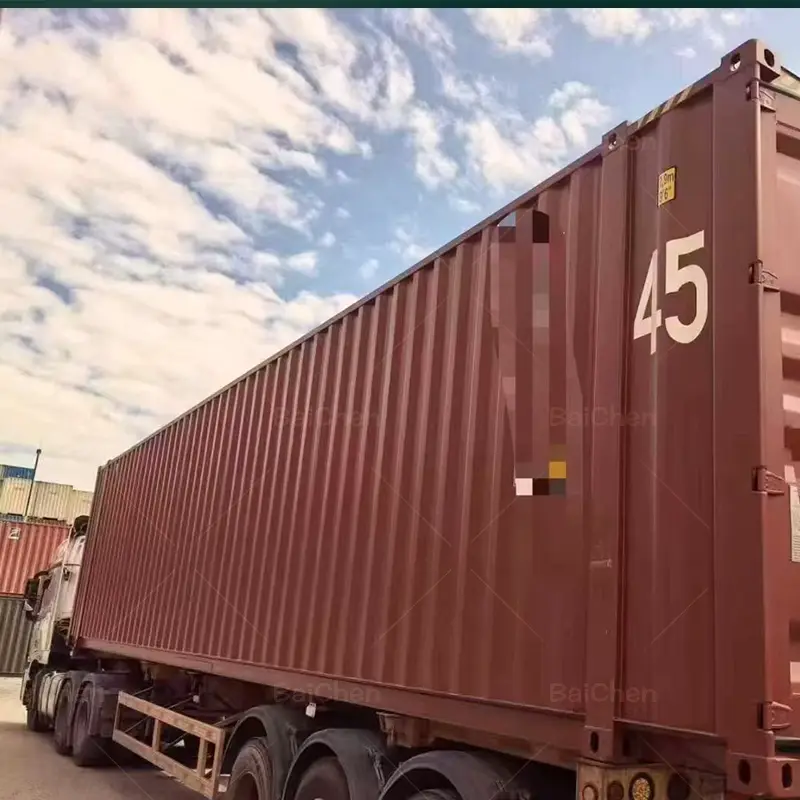
Hello everyone!
I’m Baichen-bill, and I’m delighted to be back with you all again! (^_^)
Today, I will cover the following three key areas to explain how to import small-batch goods from China while avoiding common pitfalls:
- Who qualifies as a “small-batch buyer”?
- How do you source goods from China in small quantities?
- How can you optimize your logistics costs?
a. First, let’s clarify: who exactly constitutes a “small-batch buyer”?
We can categorize them into the following three stages:
Retail/Micro-Volume Stage (Single Item/Order < $800):
This stage is typically best suited for sourcing via platforms such as AliExpress, Yiwugo, Temu, or Taobao.
At this level, you possess no bargaining power.
Product customization is virtually impossible, and logistics costs account for a relatively high proportion of the total expense.
Startup/Early-Stage Growth (Order Value: $5,000 – $80,000):
This constitutes the primary focus of this article.
Orders at this level generally meet the Minimum Order Quantity (MOQ) requirements of most suppliers, allowing for simple customizations such as adding a logo or modifying packaging.
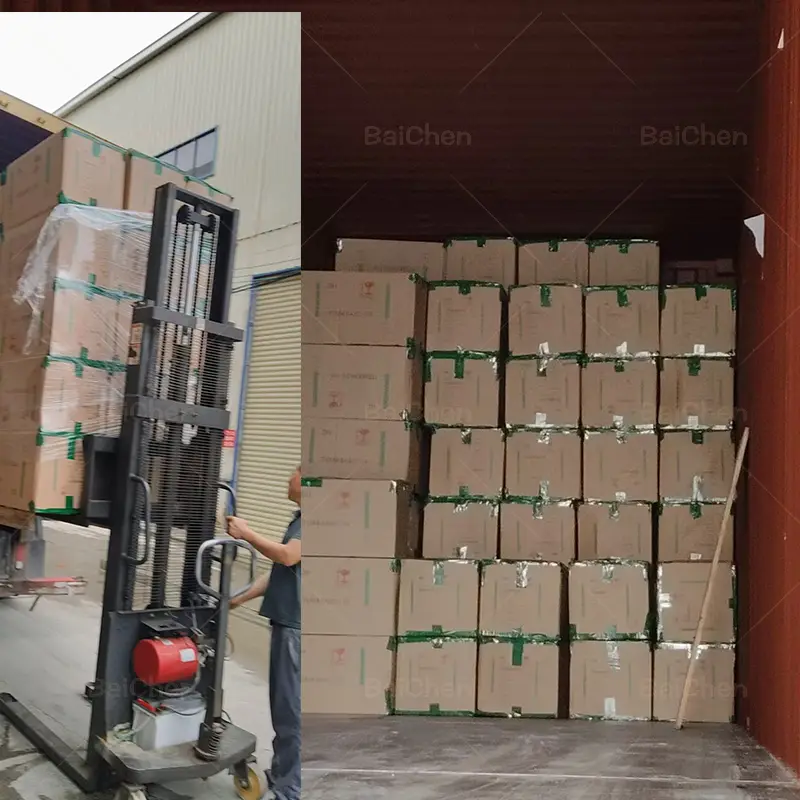
Furthermore, since the shipment volume typically ranges from Less than Container Load (LCL) to a full 40-foot container (FCL).
Utilizing “Sea-Air Combined Shipping” (a hybrid freight service) represents a highly cost-effective logistics solution.
If the shipment volume falls below 4 cubic meters, the entire import-export process becomes significantly more complex, resulting in increased costs per individual product unit.
Strategic Scale Stage (Order Value > $500,000):
At this stage, you have established a dedicated sourcing team in China.
Enabling you to engage directly with large-scale OEM factories and secure the most favorable pricing terms within the supply chain.
b. How to source goods from China in small quantities?
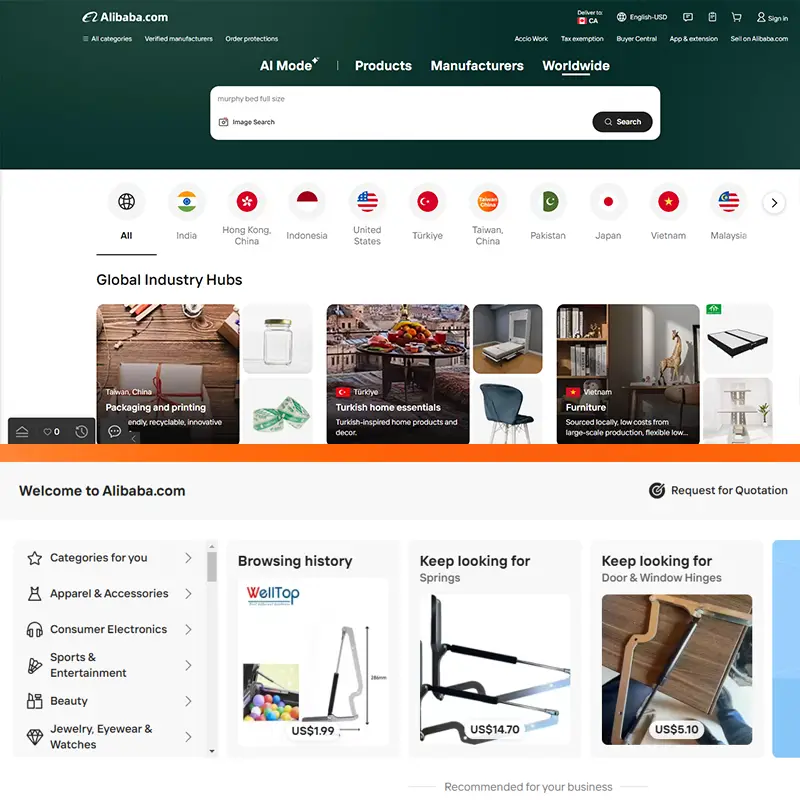
Alibaba
Whether you’re a large or small buyer, Bill recommends Alibaba first.
Ordering through Alibaba offers access to a well-established import/export trade system,
and Alibaba’s Trade Assurance terms protect your funds.
This makes it the best option for startups importing Chinese goods.
Tip:
Don’t just look at the “Verified Supplier” icon;
Check their production videos, production line photos, and past Bill of Lading (B/L) records.
DHgate & Temu & Aliexpress
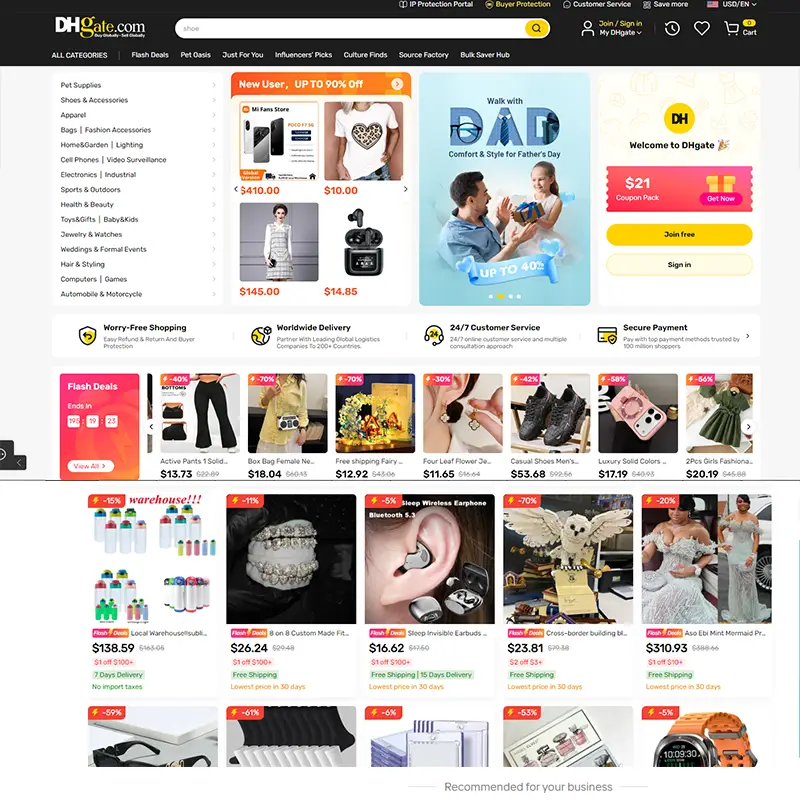
If you still can’t meet the minimum order quantity for Alibaba suppliers,
You might have to choose websites like DHgate & Temu & Aliexpress.
The advantage of these is a comprehensive product range and direct DDP delivery to your door, reducing hassle.
China’s industrial cluster effect
- Buy packaging in Wenzhou.
- Buy electronics in Shenzhen.
- Clothing in Guangzhou.
- Small commodities in Yiwu, etc.
These are all well-known industrial clusters in China, possessing extremely strong supporting capabilities.
Even if your order is small, they can quickly find matching products, packaging, and accessories.
c. How to optimize logistics costs?
For small-batch buyers, shipping costs often exceed the value of the goods, which is a major headache for most.
Small suggestion:
It’s best to ship each shipment in bulk, ideally totaling 4-5 cubic meters, using Less-than-Container Load (LCL) shipping.
This method can save you at least 3% on costs per shipment.
Logistics vs. Air Freight
International express delivery (DHL/FedEx/UPS, etc.) is suitable for goods under 300 kg (although the unit price is higher, the total cost (including customs fees) may be more cost-effective than sea freight).
Air freight is suitable for goods over 300 kg.
However, air freight requires the same import/export procedures as sea freight, and you need to pick up the goods at the airport in person.
Tip: Liquids, powders, and dangerous goods containing batteries cannot be shipped by air.
All-Inclusive Pricing (DDP/Door to Door)
Looking for companies offering “all-inclusive pricing” [freight companies specializing in specific ports or regions]
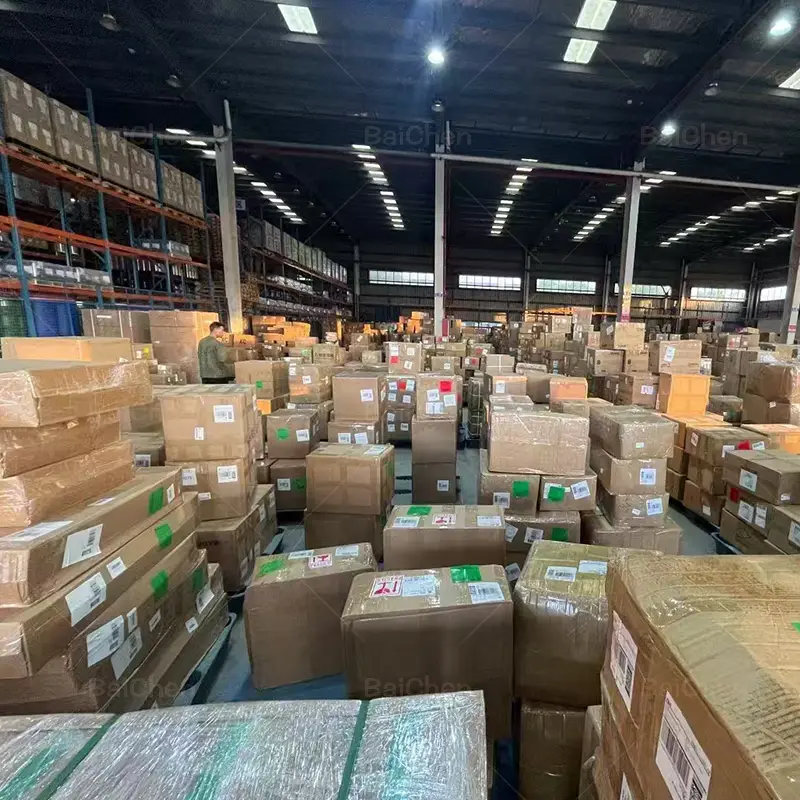
They consolidate shipments from dozens of small buyers into one full container, handling customs clearance and sorting collectively, allowing you to start at a very low cost.
For example:
- Door-to-door delivery to Malaysia and Singapore for $60 per cubic meter;
- To Kenya for $260 per cubic meter, but you need to pick up the goods at their warehouse in Nairobi;
- To Sydney/Melbourne warehouses for $270 per cubic meter, etc.
Cargo Consolidation
If you buy small quantities of goods from multiple suppliers, don’t have them ship them separately.
Consider consolidating them into one shipment to save on shipping costs. [Heavy cargo is also cheaper per unit than light cargo]
Otherwise, you’ll have to pay multiple international courier companies separately, losing a lot of profit.
Solutions:
- Find a reliable freight forwarder with its own warehouse and utilize their warehouse for cargo consolidation (usually free).
- Choose a reliable supplier and have other suppliers ship all goods to that supplier, then the freight forwarder consolidates the pickup.
Work with Baichen:
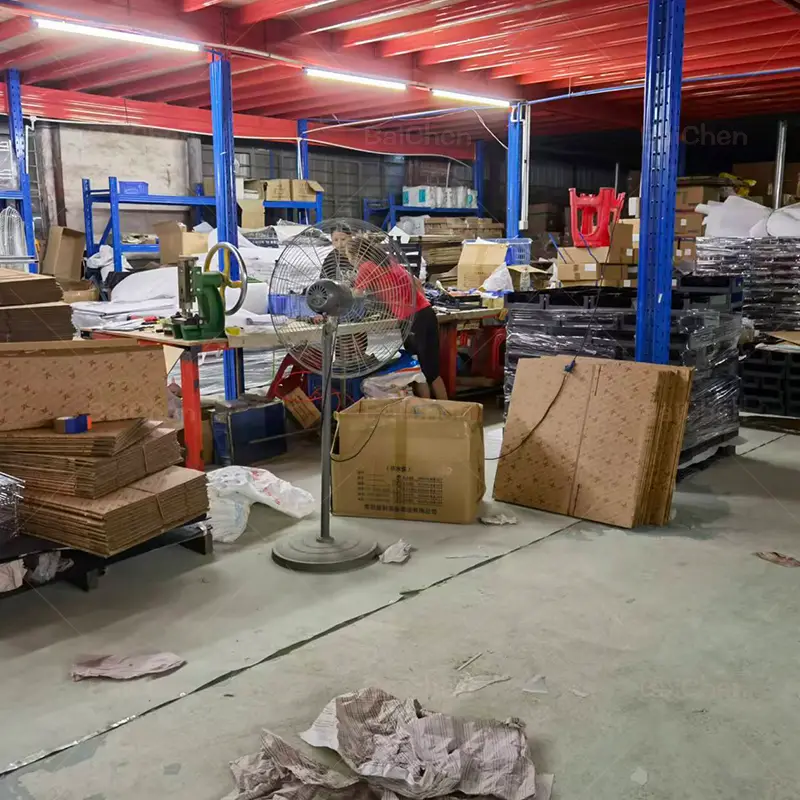
- We have our own production and processing department, with a warehouse area of over 15,000 square meters.
- We can handle small orders that most factories don’t accept.
- We handle complex customs clearance procedures and numerous quality issues.
- We help you receive all loose goods from suppliers, repackage, label, and consolidate shipments.
- This can typically save you 20%-50% on shipping costs.
- We are not just a purchasing agent, but your “Chinese partner.”
- We verify suppliers’ business licenses, conduct on-site factory visits, and ensure the safety of every penny of your deposit.
I’m Bill.
If you need customized products such as cable trays or pull-out baskets,
feel free to contact us! Haha!
Bye! ~V~V~