
In the global trading system—whether for startup brands, cross-border e-commerce sellers, or offline wholesalers with established distribution channels—
“How to source products from China safely and efficiently” remains an unavoidable topic.
Navigating the complex web of business relationships in China, importers generally have two primary options:
- ए. Through online B2B platforms (such as Alibaba, Made-in-China, Global Sources, and Yiwugo);
- बी. Hiring a sourcing agent.
In this article, Baichen draws on practical case studies to provide an in-depth analysis of the pros, cons, and ideal use cases for each sourcing model.
I. Pros and Cons of Online B2B Platforms
ए. General Overview:
- 1. Extensive product coverage and a wide variety of categories.
- 2. Platform endorsement and trade protection (providing basic transaction guarantees).
- 3. A high concentration of intermediaries—or “trading companies”—that often present themselves with polished, professional branding.
- 4. Easy account registration, allowing for direct contact with suppliers.
- 5. Well-suited for beginners: offers transaction security and helps build a foundational understanding of the industry.

बी. Differentiated Positioning and Risk Factors of the Four Major B2B Platforms
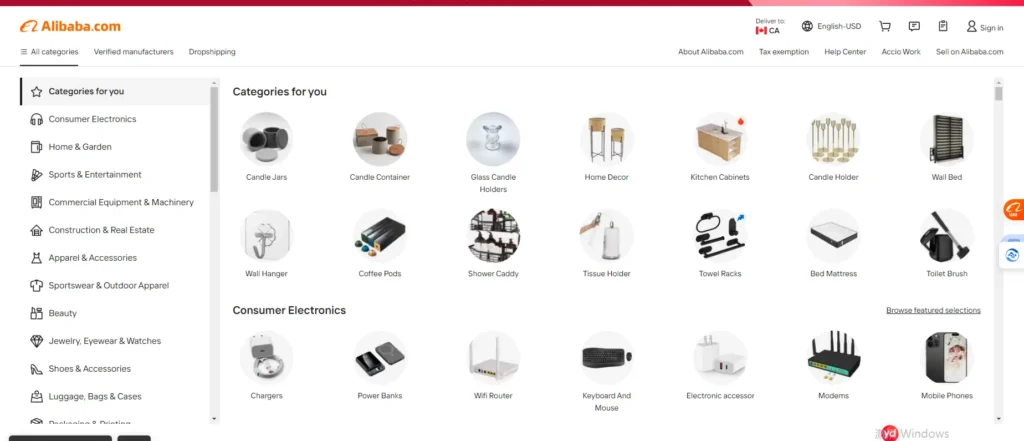
Alibaba
Positioning: The world’s largest comprehensive cross-border B2B platform.
Key Advantages:
- Offers an incredibly broad range of products;
- its “Trade Assurance” service provides basic transaction guarantees, making it ideal for quick price comparisons and sourcing samples of standardised goods.
Potential Risks:
The platform is saturated with trading companies;
The authenticity of their status as the “source” (manufacturer) is often questionable, as many lack independent production capabilities.
High Screening Costs for Buyers:
The “Gold Supplier” status merely denotes a paid membership; buyers must invest significant time in conducting their own due diligence and background checks.
Made-in-China
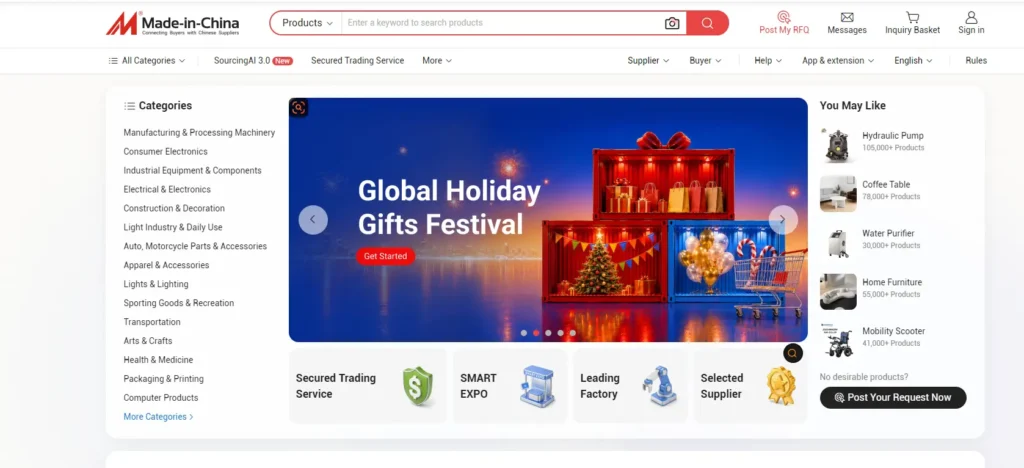
Positioning: A primary hub for traditional industrial procurement, focusing on heavy industrial goods, large-scale equipment, construction materials, and hardware.
High Proportion of Physical Factories:
- Most suppliers on the platform are established manufacturing plants;
- Instances of exaggerated claims regarding technical documentation, equipment inventory, or facility size are relatively rare.
High Minimum Order Quantities (MOQs):
Large-scale heavy industrial enterprises typically schedule production based on full container loads (FCL) or major engineering projects;
They show very little interest in accommodating small-scale “test” orders (e.g., those worth only a few hundred dollars).
आगे, in sectors like 3C electronics, fast-fashion apparel, and small accessories, product designs tend to be dated, with a slow pace of innovation and iteration.
Global Sources:
Positioning: Focuses on medium-to-large-scale export-oriented manufacturing enterprises, with an emphasis on OEM/ODM services.
Core Strengths:
- Integrates trade shows with an online platform; particularly strong in consumer electronics, apparel, and gifts.
- Many suppliers have strong proprietary design capabilities, making them well-suited for medium-to-large brands seeking in-depth ODM customisation.
Potential Risks and Pain Points:
Factories prioritise a buyer’s annual procurement volume and brand background.
They often won’t accommodate small orders, and their prices tend to be high—making them a poor fit for sellers who compete primarily on price.
Yiwugo:
Positioning: The official online platform for the Yiwu International Trade City, bringing products from 80,000 physical storefronts online to create an integrated offline-online marketplace.
Core Strengths:
- Offers an extensive range of SKUs, including small commodities, daily necessities, and accessories;
- Supports rapid, mixed-batch purchasing.
Potential Risks:
These stalls primarily serve the domestic market; most are unable to provide the export customs documentation, compliant packaging, or bilingual communication required to meet international standards.
Additionally, the defect rate for low-cost goods can be relatively high; therefore, quality inspections are strongly recommended before shipment.
II. The Business Value of a Sourcing Agent
ए. Overview of a Sourcing Agent:
A sourcing agent acts as a vital bridge and intermediary between buyers and suppliers.
Their primary responsibilities include identifying suppliers, conducting business negotiations, managing quality control (क्यूसी), and coordinating cross-border logistics.
Leveraging their local supplier networks, they help international clients access the Chinese market more cost-effectively.
बी. Advantages of a Sourcing Agent:
Cultural Nuances and Market Insight:
They possess deep knowledge of the local market and specific industries.
Being local, they have a nuanced understanding of cultural customs and practices.
This expertise is particularly valuable for startups that are new to importing goods from China.
गुणवत्ता आश्वासन:
Sourcing agents conduct on-site visits and perform rigorous supplier audits.
Their quality control teams provide detailed inspection reports.
They ensure that products meet your quality standards before they are delivered to you.
Time Savings:
They streamline the procurement process by consolidating goods from multiple suppliers—handling tasks like packaging and labeling before shipment.
Thanks to their local supplier networks, they can quickly provide product images or arrange for samples to be sent to the client.
सी. Disadvantages of a Sourcing Agent:
Costs:
Hiring a sourcing agent involves service fees;
These typically range from 3% को 8% of the total order value.
For startups with tight budgets, this can represent a significant expense.
Unreliable Agents:
The market is saturated with a wide variety of sourcing agents, and some may prove to be unreliable. Secretly taking large kickbacks from factories;
A proliferation of “shell companies” (one-person operations) that lack the capital to provide any form of financial recourse or guarantees.

III. How to Evaluate a Reliable Sourcing Agent in China?
Years of Operational Experience
Look for a team with 8–10+ years of hands-on experience, which typically implies established connections with factories across various product categories.
In-House Warehousing Capabilities
Verify via video call whether the agent owns or operates a large-scale warehouse (e.g., a consolidation facility spanning thousands to tens of thousands of square meters).
Market Reputation and Endorsements
Market reputation is a key indicator of an agent’s integrity and reliability.
Consider reaching out to their past clients or industry peers to gain an authentic perspective on what it’s like to work with them.
Additionally, you may ask the agent for:
- A track record of completed projects;
- Letters of recommendation or testimonials from industry leaders;
- You can also conduct an online search to check for any history of complaints or disputes.
Contract Negotiation and Terms
Be wary of companies that claim to charge “zero service fees” but secretly collect large kickbacks from factories.
Legitimate firms typically use a transparent, tiered commission structure (e.g., 3%–5%) or a fixed service fee.
The contract must ensure that the sourcing agent:
Maintains full transparency regarding their procurement processes, fee structures (commissions or service fees), and any potential conflicts of interest.
The contract should clearly define the division of responsibilities, scope of work, pricing and billing models, payment methods, non-disclosure agreements (NDA), and dispute resolution mechanisms.
IV. Summary and Actionable Advice
Whether you choose to hire a sourcing agent or handle procurement independently, this is a significant decision.
For small-scale product testing (under $2,000):
Baichen suggests using platforms like Alibaba to conduct market research and compare initial samples, helping you build a foundational understanding of the industry.
For orders exceeding $5,000:
If your goal is stable delivery, expanding into multiple product categories, or scaling your operations:
Consider outsourcing the entire supply chain process—including sourcing, गुणवत्ता निरीक्षण, and logistics—to a professional and trustworthy local sourcing agent (such as… बाइचेन
is the optimal business path to enhance your competitiveness in your local market and reduce your Total Cost of Ownership (TCO).
For orders exceeding $50,000 USD:
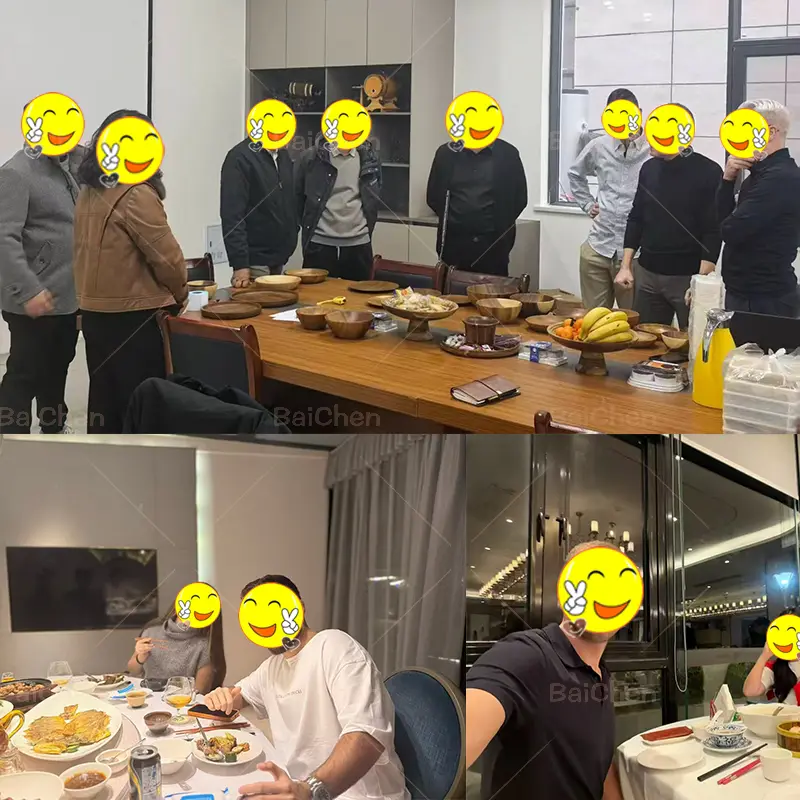
We recommend an on-site factory visit to evaluate production capacity and the working environment,
giving you a firsthand look at the supplier’s operations and quality standards.
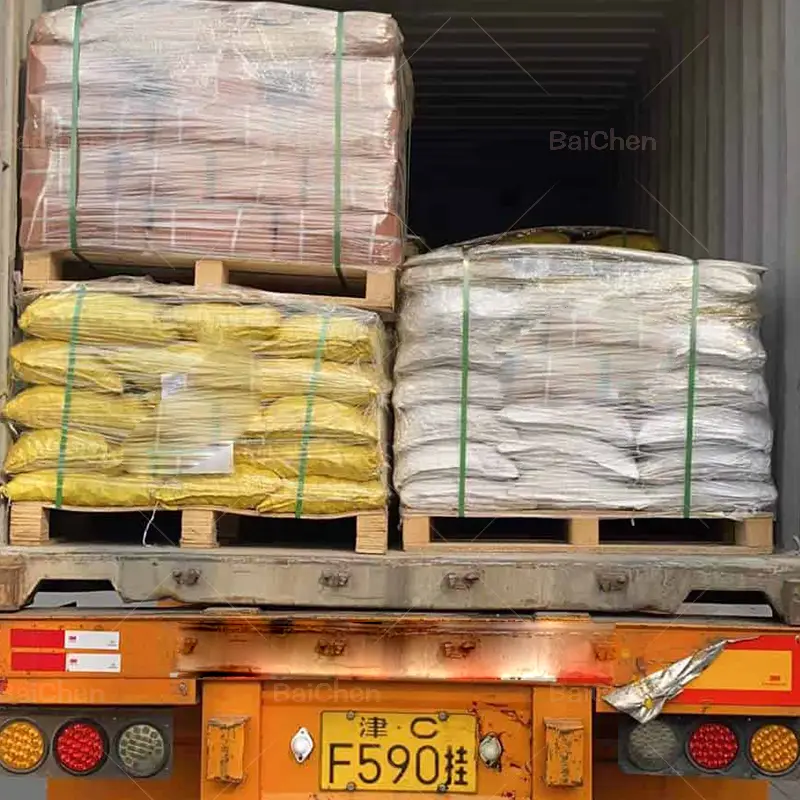
अंत में, बाइचेन has been deeply rooted in the manufacturing industrial clusters of Guangdong for over a decade.
Whether you need to consolidate shipments across different product categories and factories,
or require professional cargo inspection services—we are here to help.
Get in touch with us to receive a bespoke VIP plan
designed to boost your market competitiveness while saving you time and effort.
Bye Bye! ~V~ ~V~